
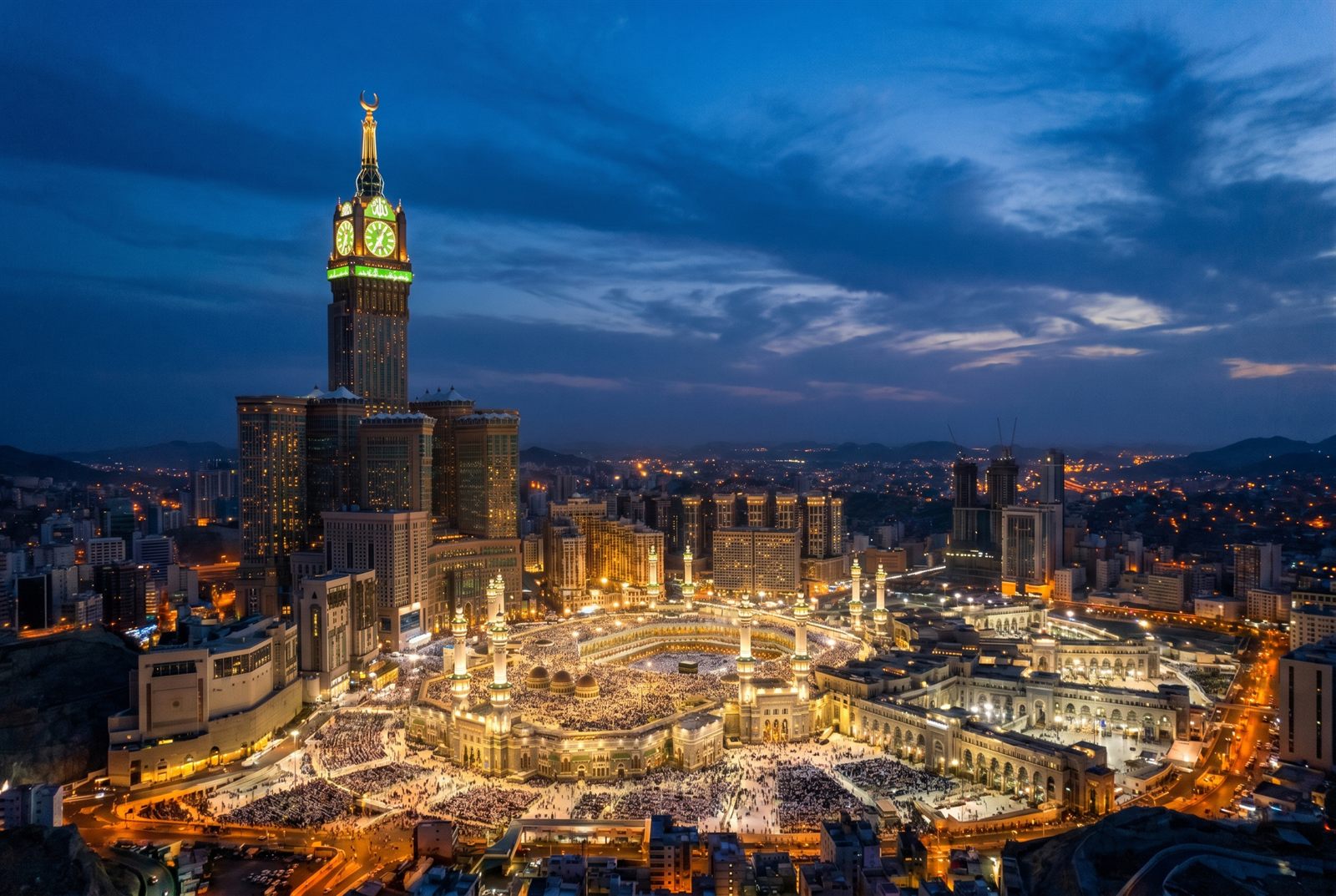
Ask anyone who has spent Ramadan in Makkah and Madinah what it was like, and you will usually get a pause before the answer. The month that is already the high point of the Muslim year, lived in the two places where it means the most, is an experience that does not fit easily into words. It is also the busiest and most demanding time to perform Umrah. Here is what makes it special, what to expect and how to plan it from the UK.
Why Ramadan Umrah is different
The reward of Umrah in Ramadan is established in the most authentic sources. The Prophet ﷺ said to a woman from the Ansar who had missed travelling with him for Hajj:
"Umrah in Ramadan is equivalent to Hajj." Narrated in Sahih al-Bukhari and Sahih Muslim. In one wording of the hadith, "equivalent to a Hajj with me".
Scholars are careful to explain that this refers to the reward, and that Umrah in Ramadan does not discharge the obligation of Hajj for someone who is able to perform it. Even so, the promise is extraordinary, and it is the reason the Haram in Ramadan draws pilgrims from every corner of the world.
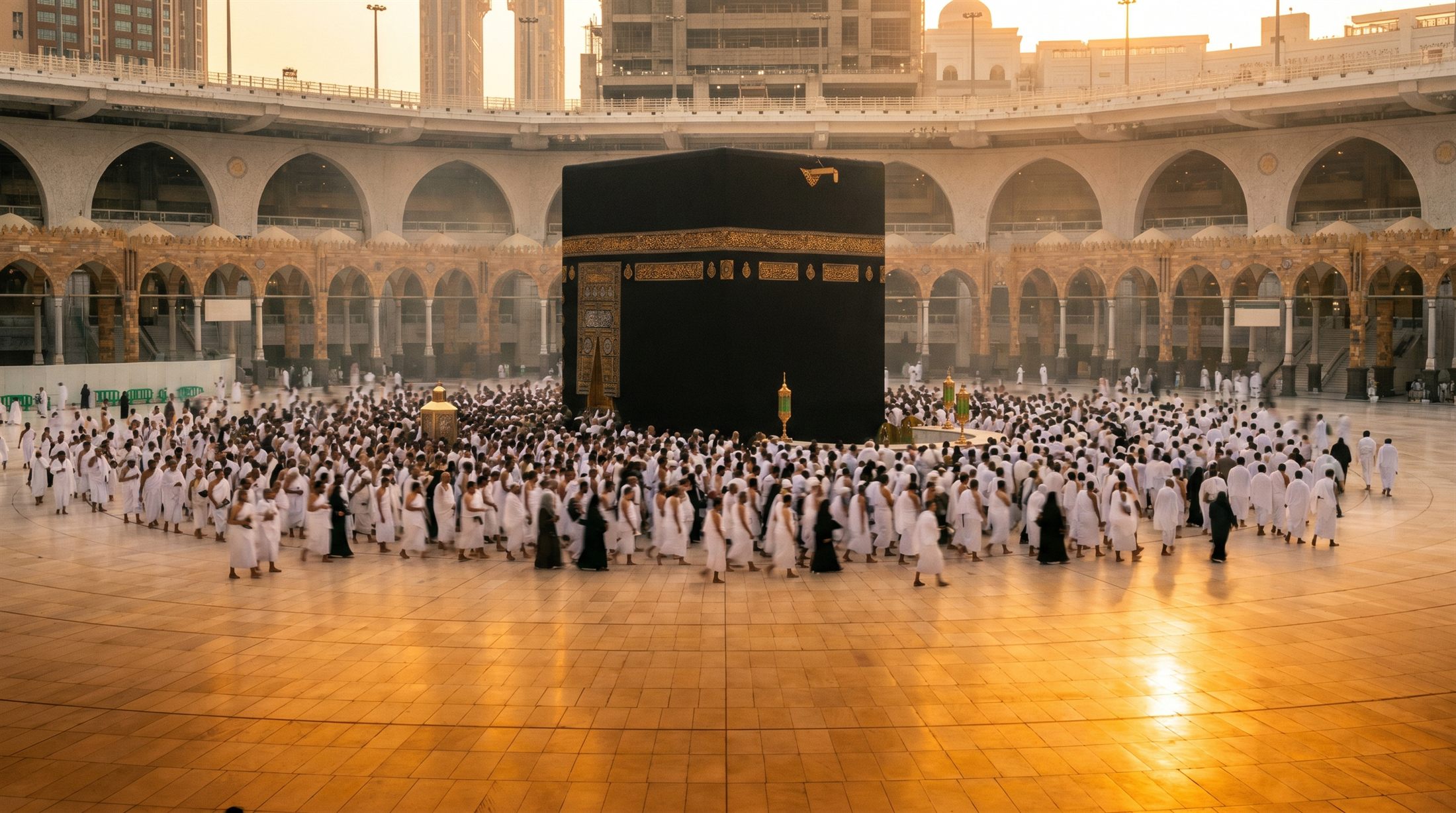
Beyond the hadith, there is the month itself. Fasting in a place where the whole city fasts with you, breaking the fast on the marble of the Haram with strangers who have become brothers and sisters, praying Taraweeh behind the imams of the two mosques with the Kaaba in front of you, and seeking Laylat al-Qadr in the last ten nights in the holiest place on earth: these are the things pilgrims remember for the rest of their lives.
What to expect on the ground
Crowds
Ramadan is the busiest period of the year for Umrah outside Hajj itself, and the last ten nights are the busiest of all. Tawaf on the ground floor can take well over an hour; the upper floors and roof are the quiet alternative. Entering the mosque for Maghrib, Isha and Taraweeh requires arriving early, often an hour or two before the adhan, and the surrounding streets fill completely. This is not a reason to stay away. It is a reason to go with people who know how the month works, to stay close to the mosque, and to adjust your expectations: you may not perform ten Umrahs, but you will pray in congregations of a size you will never see again.
Iftar in the Haram
Every evening, volunteers lay out long sheets across the mosque and courtyards with dates, water, Zamzam, yoghurt, bread and sometimes coffee. Pilgrims sit shoulder to shoulder, the adhan sounds, and hundreds of thousands break their fast together. It is simple food and one of the most moving sights in the Muslim world. Hotels offer full iftar buffets too, but try to break your fast in the mosque at least a few times.
Taraweeh, Tahajjud and the last ten nights
Taraweeh in both mosques is led by renowned reciters, and in the last ten nights an additional night prayer (Tahajjud or Qiyam) is held in the early hours, with the completion of the Qur'an and the long, tearful du'a that follows. If you can only be there for part of the month, most pilgrims choose the last ten nights. If your schedule allows, the first half of the month is markedly calmer and the Umrah itself is easier.
The rhythm of the day
Life in Ramadan Makkah runs at night. Shops open late and stay open until Fajr; the streets are busiest after Taraweeh. Pilgrims typically sleep after Fajr until late morning, pray Dhuhr and Asr in the mosque, rest, and return before Maghrib for the evening. Build naps into your day and do not try to keep British hours.
How early to book
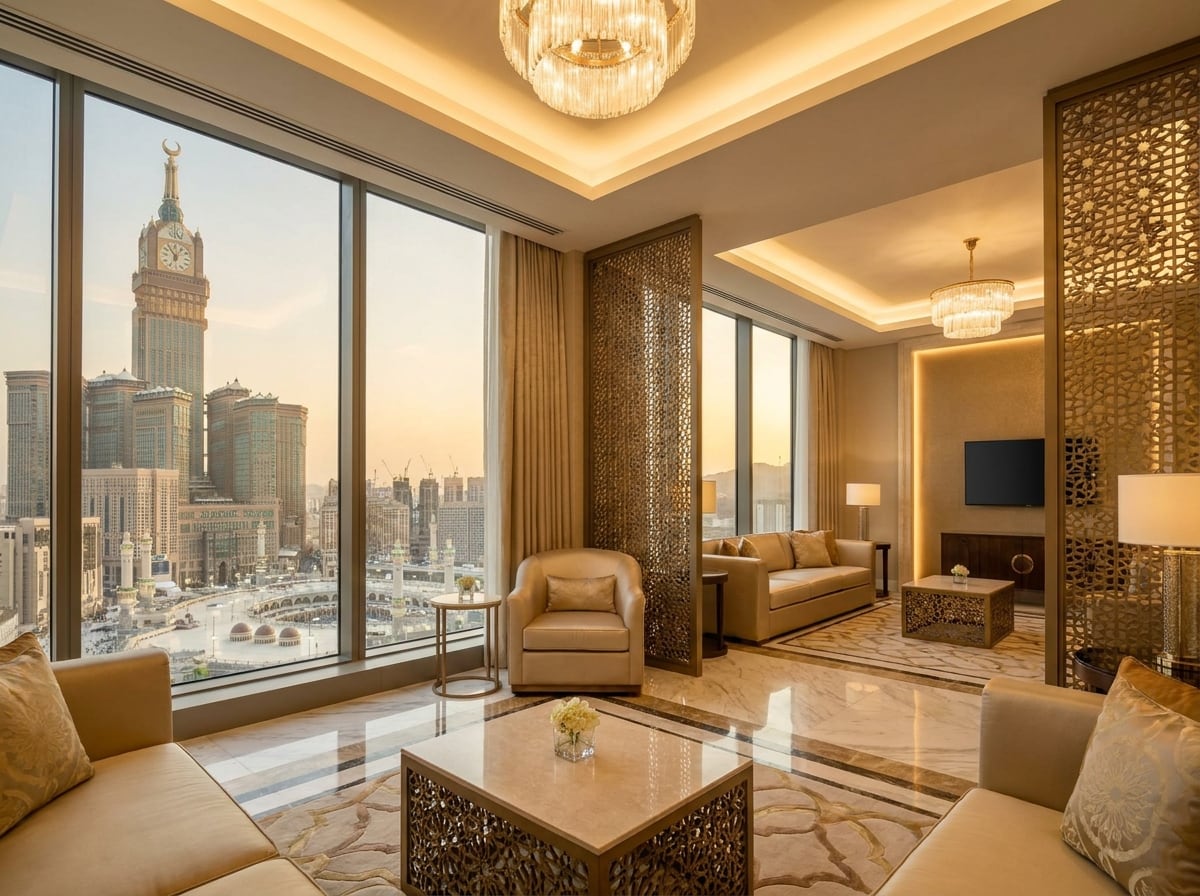
Hotels close to the Haram sell out for Ramadan many months in advance, and the nearest ones fill first, often a year ahead for the last ten nights. Flights into Jeddah and Madinah also rise sharply in price as the month approaches. In practical terms, if you are considering Ramadan Umrah, start the conversation with your agency as soon as the dates are announced and ideally the moment you decide, rather than waiting for the New Year. Group trips are usually fixed to either the first half, the last ten nights, or the whole month, so decide early which suits your work and family commitments. Our Ramadan Umrah group for the coming year is already taking expressions of interest.
Flights from the UK
Pilgrims from across the UK have good options. From London Heathrow, direct flights to Jeddah take around six and a half to seven hours, and there are also direct services to Riyadh and, at some times of year, to Madinah. From Manchester there have been direct services to Jeddah as well as a wide choice of one-stop routes. From Birmingham and other regional airports, the most common routings connect through Doha, Dubai, Istanbul or Abu Dhabi, which adds a few hours but often works well for timing the arrival. Groups usually fly together from one airport, with the agency advising on connections for those joining from elsewhere.
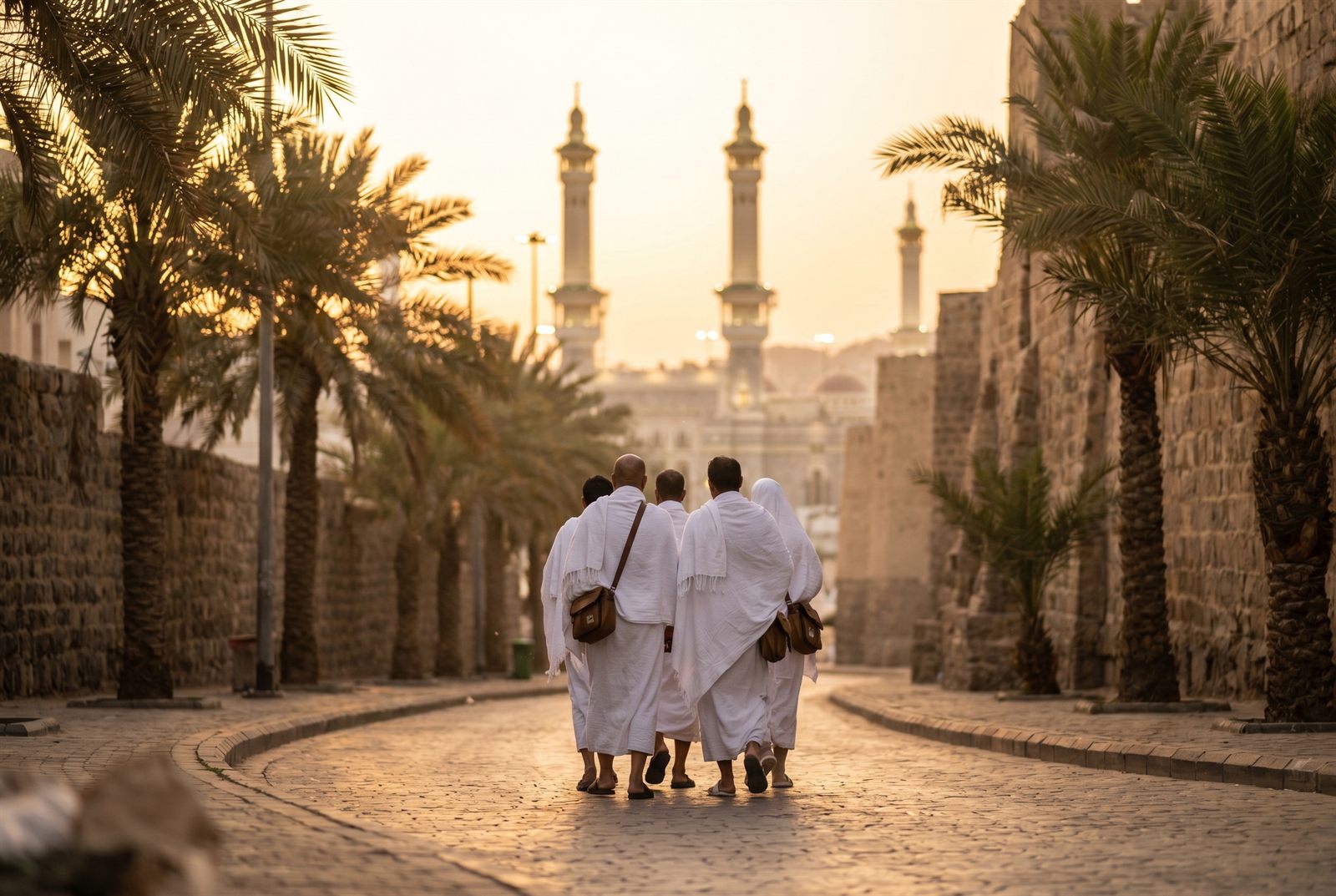
Two practical notes. Flying into Madinah first and travelling to Makkah by coach or the Haramain high-speed train is a calmer way to begin, and it means you enter ihram at the miqat on the ground rather than on the aircraft. And if you do fly directly into Jeddah, prepare your ihram before boarding or at the connecting airport; our first-time guide explains the details.
Fasting while you travel
- The traveller's concession. Islam allows a traveller to break the fast and make the days up later. Many pilgrims choose to fast on the flight anyway; others, especially those with long connections, use the concession. Both are valid, and your scholar can advise on your situation.
- Timings on the plane. If you fast in the air, you break the fast when the sun sets where you are, not by UK or Saudi time. Cabin crew on Ramadan flights to Saudi Arabia will usually announce iftar.
- Fast length. Fasts in Makkah and Madinah are fairly consistent through the year, roughly twelve to fourteen hours depending on the season, which many UK pilgrims find easier than a British summer fast.
- Hydration. The heat and the walking are the challenge, not the hours. Drink steadily between iftar and suhoor, favour water and Zamzam over sugary drinks, and keep suhoor substantial with slow-release foods.
- Pace yourself. Perform your Umrah on arrival while you are fresh, ideally outside the peak hours after Taraweeh, and then settle into a sustainable routine of prayer and rest.
- Health. Anyone with diabetes, blood-pressure problems or other conditions should speak to their GP before travelling and to their scholar about whether fasting in the heat is appropriate for them.
Ramadan Umrah with children or elderly parents
It is entirely possible and often wonderful, but it needs planning. Choose a hotel as close to the Haram as your budget allows, so the elderly can return to rest between prayers; prefer the first half of the month over the last ten nights for the gentlest crowds; use the upper floors for tawaf; and agree a meeting point in case anyone is separated. Wheelchairs and pushers are available at the Haram for those who need them.
Making the most of the month
A few suggestions from our guides
- Set an intention for the month beyond the Umrah itself: a Qur'an khatm, a daily habit of du'a, or a relationship to repair when you return.
- Keep a list of the people who asked you to pray for them, and pray for them by name at iftar and in the last ten nights.
- Give sadaqah locally; the Haram is surrounded by people who have travelled far with very little.
- Spend some of the month in Madinah too. Ramadan there is quieter and deeply peaceful.
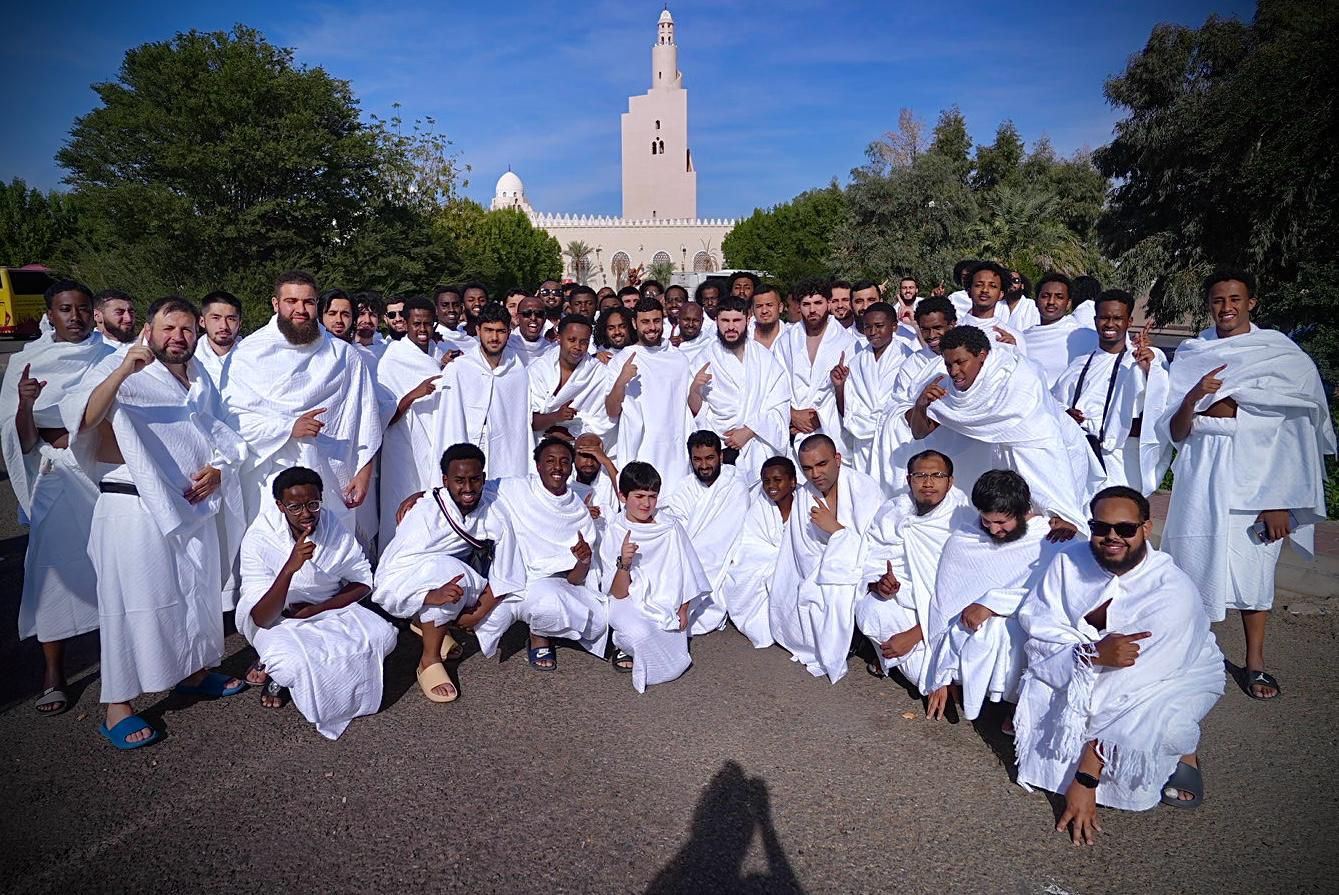
Al-Haramain Travels runs a guided Ramadan Umrah from the UK each year, with hotels close to the Haram, experienced scholars travelling with the group, and the visas, flights and transfers handled for you. Places are limited and fill early. If you are thinking about Ramadan in the holy cities, register your interest and we will talk you through the dates and options.

Guided Umrah journeys from the UK and Europe. Published 1 November 2026.