
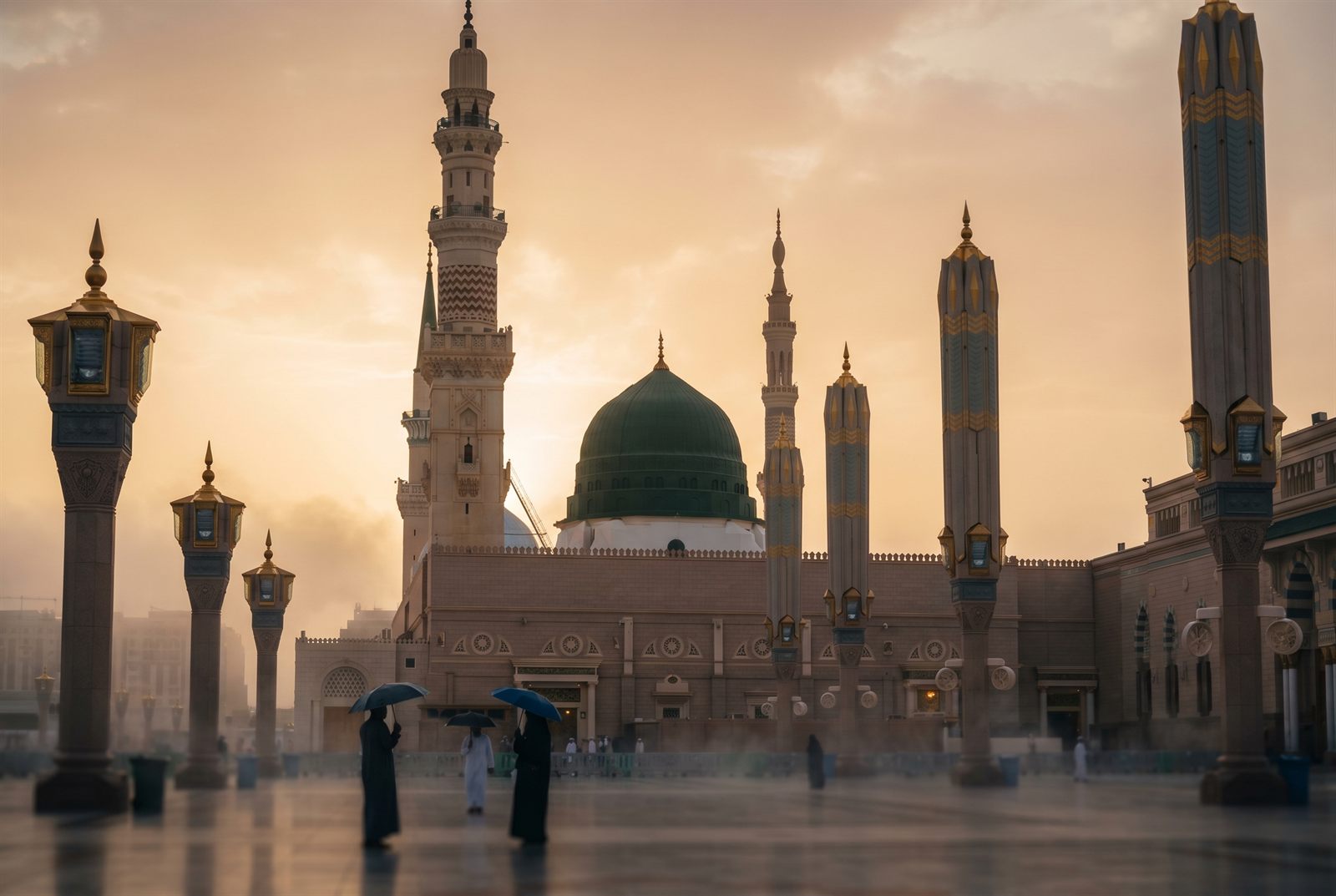
Umrah is performed in a few hours, but most pilgrims spend a week or more in the two holy cities. Much of that time is best spent in the two mosques. Some of it, though, is well spent walking the ground where the Seerah happened: the mosque the Prophet ﷺ built with his own hands, the hill where Hamza fell, the cave where revelation began. This guide covers the main ziyarah sites, what actually happened there, and how to visit them well.
What ziyarah is, and what it is not
Ziyarah simply means "visiting". The historical sites are not part of Umrah, and nothing is owed if you skip them. Their value is in remembrance: standing at Uhud and understanding the cost of the battle, or looking up at Jabal al-Nour and appreciating what the Prophet ﷺ climbed to seek seclusion. Mainstream scholarly guidance is clear on a few points, and your group's scholar will reinforce them: there is no special prayer or reward attached to these places beyond the mosques for which it is established, nothing is taken from them as a keepsake, and du'a is addressed to Allah alone, wherever you stand. With that understood, the sites become a living lesson in the Seerah.
Madinah
Masjid Quba
About three kilometres south of Masjid an-Nabawi, Quba was the first mosque built in Islam. The Prophet ﷺ stopped here on arriving from Makkah during the Hijrah and laid its foundations before entering the city. It is authentically reported in Bukhari and Muslim that he used to visit Quba regularly, riding or on foot, and pray two rak'ahs there. Because of this, most groups visit in the morning after performing wudu at the hotel, pray two rak'ahs, and return. The mosque is large, modern and calm, and the walk back to the Haram along the Quba road is pleasant in the cooler months.
Mount Uhud and the martyrs' cemetery
North of the city, the long red ridge of Uhud was the site of the Battle of Uhud in the third year after the Hijrah. Here the Muslims, after an early advantage, suffered heavy losses when the archers left their post on the small hill now called Jabal al-Rumah (the Archers' Hill), and the Prophet ﷺ himself was wounded. Seventy companions were martyred, among them his uncle Hamza ibn Abdul Muttalib, and they are buried in the enclosed cemetery at the foot of the mountain. Visitors stand outside the fence, give salam to the martyrs and make du'a for them. The sunnah of visiting graves is to greet the dead, remember the hereafter and supplicate for them; it is not to ask anything of them.
Masjid al-Qiblatayn
The "Mosque of the Two Qiblas" marks the place where, by most accounts, the command came to change the direction of prayer from Jerusalem to the Kaaba in the second year after the Hijrah. The congregation turned around mid-prayer, which is why the mosque carries its name. The current building has a single mihrab facing Makkah, with the former direction indicated inside. It is a short coach ride west of the city centre and is usually combined with Quba and Uhud in a half-day tour.
Jannat al-Baqi
Immediately to the south-east of Masjid an-Nabawi lies al-Baqi, the main cemetery of Madinah since the time of the Prophet ﷺ. Buried here are a great many companions and members of his household, including his daughters, most of his wives (Khadijah is buried in Makkah), his son Ibrahim, his uncle Abbas, his grandson Hasan ibn Ali, and the third caliph Uthman ibn Affan. The graves are unmarked mounds in keeping with the sunnah. The cemetery is opened to men at set times, typically after Fajr and after Asr, and women generally pay their respects from the boundary. The etiquette is the same as at Uhud: salam, remembrance and du'a for those buried there.
The Rawdah and the Prophet's grave
Inside Masjid an-Nabawi, the area between the Prophet's ﷺ house (now his grave) and his minbar is the Rawdah, which he described as a garden from the gardens of Paradise. Entry to pray in the Rawdah is now by timed permit through the Nusuk app, with separate sessions for men and women. Passing by the grave to give salam to the Prophet ﷺ and to Abu Bakr and Umar beside him is done calmly, in a moving line, with a lowered voice, and without stopping to face the grave in prayer.
Makkah
Jabal al-Nour and the Cave of Hira
On the north-eastern edge of the city stands Jabal al-Nour, the Mountain of Light. Near its summit is the small cave of Hira where the Prophet ﷺ used to withdraw for reflection before his prophethood, and where the first verses of Surah al-Alaq were revealed to him by Jibril. The climb is steep, takes most people an hour or more each way on rough steps, and is not advisable in the heat of the day, for the elderly or for anyone with heart or joint problems. Climbing it is not an act of worship and carries no reward in itself; many pilgrims simply view the mountain from the base. If you do climb, go early, carry water and do not write on the rocks or leave anything behind.
Jabal Thawr
South of Makkah, the cave on Mount Thawr sheltered the Prophet ﷺ and Abu Bakr for three nights at the start of the Hijrah, while the Quraysh searched for them. It was here that Abu Bakr feared discovery and the Prophet ﷺ reassured him with the words recorded in the Qur'an: "Do not grieve; indeed Allah is with us" (Surah at-Tawbah 9:40). The climb is harder and longer than Hira, and most groups view the mountain from the road while the guide recounts the story.
Jannat al-Mu'alla
The ancient cemetery of Makkah, a short distance north of the Haram, is the resting place of Khadijah bint Khuwaylid, the Prophet's ﷺ first wife and the first to believe in him, as well as his grandfather Abdul Muttalib, his uncle Abu Talib and his son Qasim. As at al-Baqi, the graves are unmarked, entry is regulated, and the visit is for salam and du'a.
Masjid Aisha at Tan'im
Not a historical site as such, but important practically: this mosque sits just outside the boundary of the Haram (the sacred precinct) on the Madinah road, in the area known as al-Hill. Pilgrims already in Makkah who wish to perform an additional Umrah enter ihram here. It is named after Aisha, who entered ihram from this spot during the Farewell Hajj.
Mina, Muzdalifah and Arafat
East of Makkah lie the three sites of Hajj, and most Umrah ziyarah tours drive through them. Mina is the valley of white tents where pilgrims stay during the days of Hajj and where the Jamarat, the three pillars that mark the stoning, stand. Muzdalifah is the open plain where pilgrims spend the night after Arafat. Arafat is the plain where the Prophet ﷺ delivered his Farewell Sermon and where the central rite of Hajj, the standing on the Day of Arafah, takes place; Masjid Namirah stands at its edge. The small hill of Jabal al-Rahmah on the plain is where he stood, but climbing it or seeking blessing from it has no basis; it is enough to see the plain and remember the day on which a Hajj pilgrim's sins are forgiven. Outside Hajj season these places are quiet, and seeing them empty makes their scale, and the achievement of the Hajj, far easier to grasp.
Visiting well
- Go with a knowledgeable guide. The sites are mostly unmarked and their meaning lies in the story, not the stones.
- Dress and behave as you would in the Haram. These are places of remembrance, not sightseeing.
- Give salam at the cemeteries, make du'a for the dead, and address your requests to Allah alone.
- Take nothing away and leave nothing behind, including writing on rocks or tying cloth to railings.
- Plan ziyarah for the morning, when it is cooler, and keep the prayers in the mosques.
Every Al-Haramain Travels group includes guided ziyarah in both cities, led by scholars who explain each site in its proper context. If you would like to experience the Seerah on the ground as part of your Umrah from the UK, get in touch.

Guided Umrah journeys from the UK and Europe. Published 27 October 2026.